
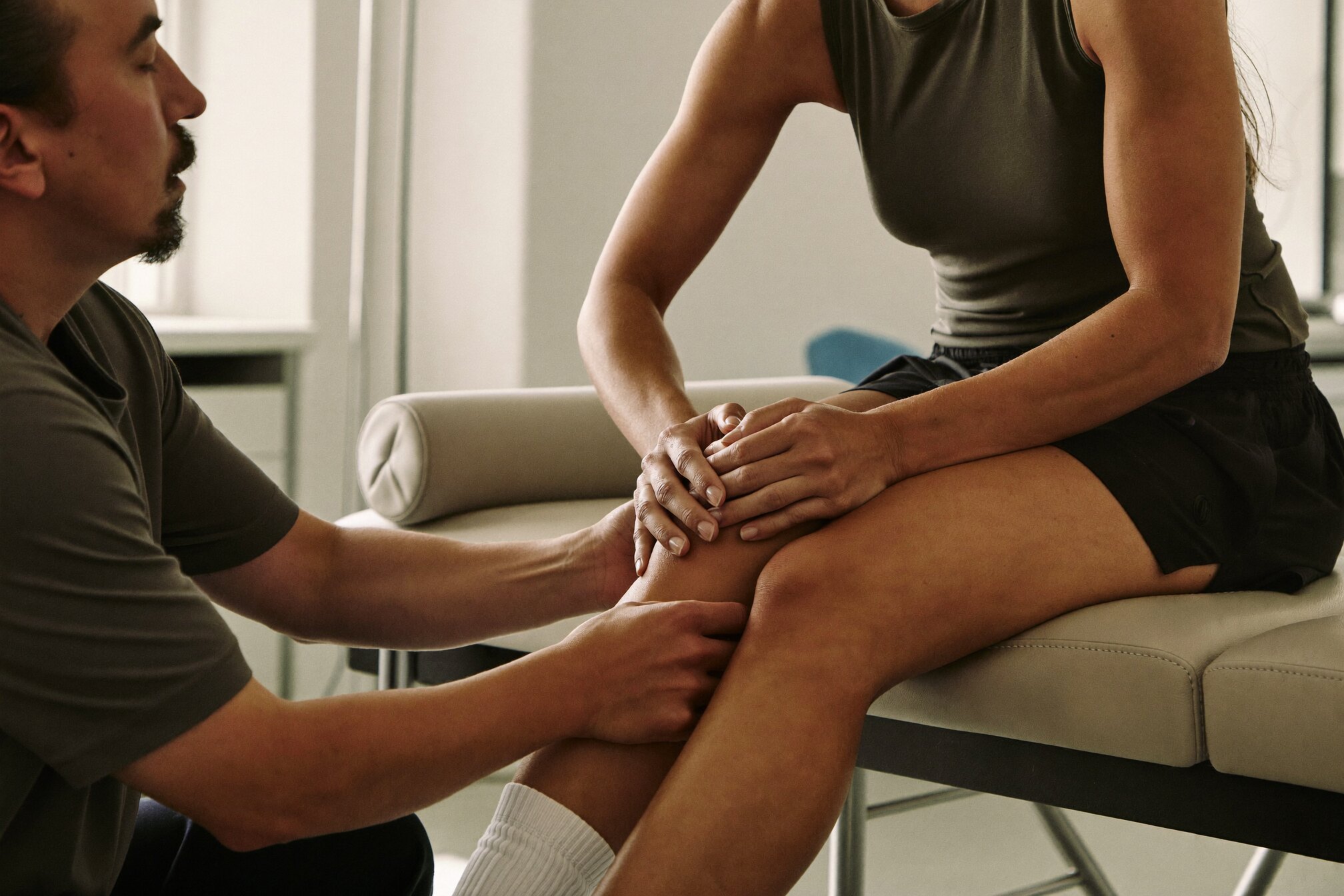
Short answer: ACL tears are treated on a spectrum. Some are managed with structured rehabilitation and never need surgery, while others, especially in athletes returning to cutting and pivoting sports, are reconstructed surgically. Either way, the first weeks focus on the same things: calm the swelling, restore knee extension and quad control, and protect the rest of the leg. The decision about surgery is made after that early phase, not in the first forty-eight hours.
This article is part of our full guide to sports injury recovery in Arvada.
What Actually Tears
The anterior cruciate ligament runs diagonally through the middle of the knee and keeps the shin from sliding forward or rotating too far under the thigh bone. Most tears are non-contact: a plant and cut, a hard deceleration, or an awkward landing where the knee rolls inward while the foot stays fixed. Many people feel or hear a pop, followed by swelling within a few hours and a sense that the knee cannot be trusted.
Surgery or Rehab: How the Decision Gets Made
Three factors drive the conversation: what you want to return to, how stable the knee is once swelling settles, and what else was injured. Meniscus and cartilage damage, repeated episodes of the knee giving way, and a goal of returning to soccer, basketball, skiing, or another pivoting sport push toward reconstruction. Straight-line activity goals, a knee that feels solid after rehab, and a preference to avoid surgery push toward a rehabilitation-first trial.
The First Two Weeks Look the Same Either Way
- Reduce swelling, since a swollen knee shuts down the quadriceps
- Restore full knee extension early, because losing it is hard to reverse later
- Rebuild quad activation with isometrics and controlled range work
- Keep the hip, ankle, and opposite leg strong instead of letting the whole chain deload
- Walk as normally as your provider allows, so you are not locking in a limp
Why the Rest of the Chain Matters
A knee injury rarely stays a knee problem. Within a few weeks, most people show stiff ankles, guarded hips, a tight low back from the altered gait, and a noticeably weaker glute on the injured side. Restoring motion in those areas and loading them deliberately is what keeps the rehab plan progressing instead of stalling on knee pain alone.
Red Flags That Need Immediate Medical Care
A knee that locks and cannot be straightened, obvious deformity, inability to bear any weight, numbness or a cold foot, or rapidly expanding swelling with severe pain should be evaluated urgently rather than rehabbed.
Related Care and Reading in Arvada
Read next: can you rehab an ACL tear without surgery, how ACL tears are diagnosed and graded, and return-to-sport testing after an ACL injury. Related knee and leg articles include runner's knee and plantar fasciitis. For care options, see sports injury recovery in Arvada, our chiropractic services, and chiropractic care in Arvada.
Book a Knee Assessment in Arvada
If your knee swelled, gave way, or still feels unreliable after an injury, get it assessed alongside the hip and ankle. Schedule a sports injury evaluation at (720) 257-9562 or book online. https://momentouschiropractic.janeapp.com/