
Sports Care
Sports Chiropractor in Arvada, CO
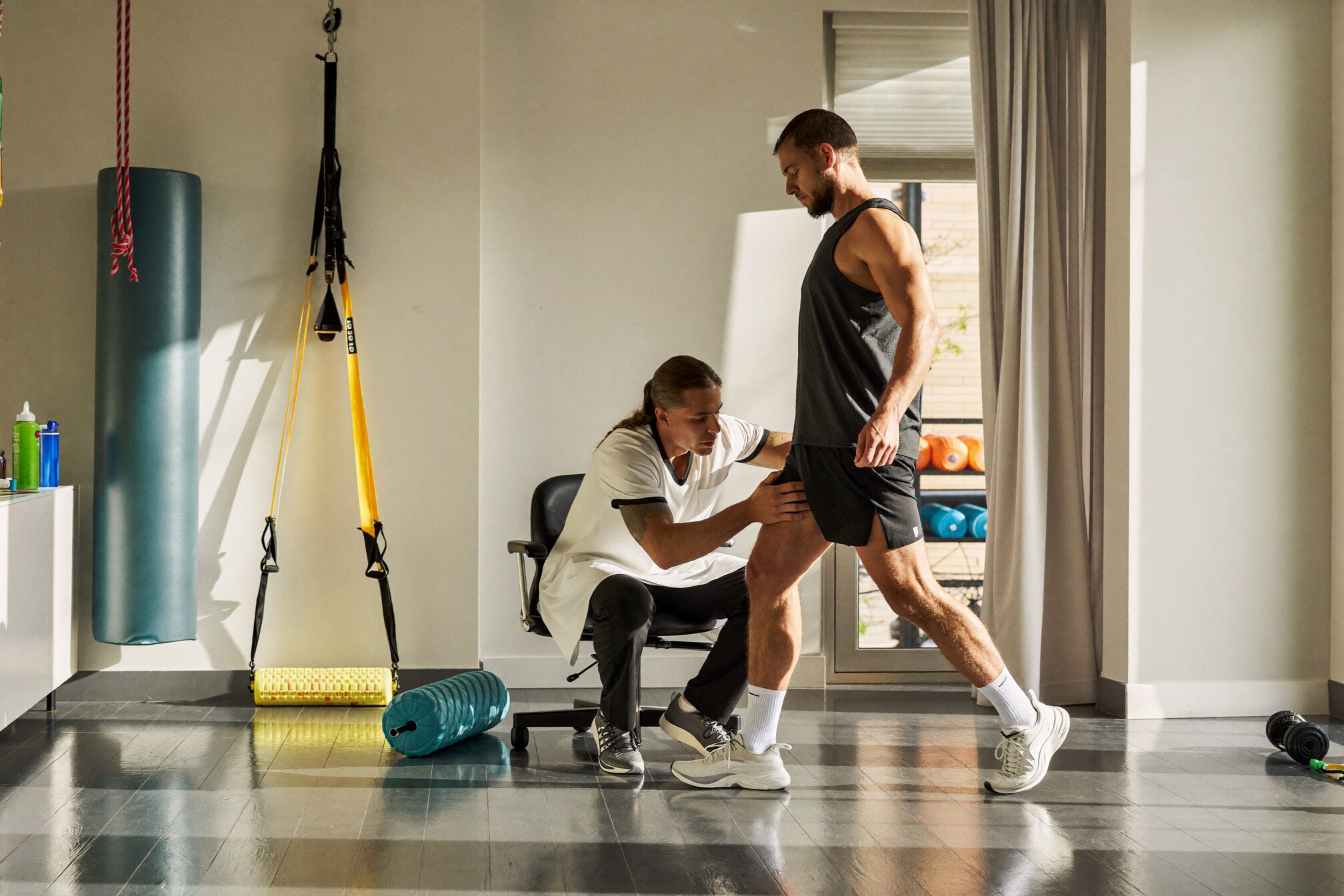
Sports chiropractic care for strains, joint restriction, tendon overload, and the movement patterns behind recurring pain, so you get back to training on criteria rather than guesswork.
Short answer: how does a sports chiropractor help you recover?
Most sports injuries are musculoskeletal, and they recover fastest with brief protection followed by early, pain-tolerable movement and progressive loading. Care restores motion in the restricted joints, calms the overloaded tissue, and rebuilds capacity in the areas that were doing too little, then clears you back to sport on measurable criteria. Suspected fractures, ruptures, dislocations, or injuries with progressive weakness are referred for imaging or orthopedic evaluation first.
Typical relief timeline
Mild strains one to three weeks; tendon problems eight to twelve weeks of loading.
Rest or move
Protect briefly, then move within a mild pain range. Full rest slows tissue adaptation.
Return to sport
Criteria-based: pain-free range, near-equal strength, full-speed movement, no next-day flare.
Sports injuries and complaints we see most often
Colorado athletes load their bodies year-round: trail running and road miles, lifting, climbing, cycling, ski and snowboard seasons, and youth sports schedules. Most of what comes through the door is overload and compensation rather than a single traumatic event.
- ✓Low back pain after lifting or running
- ✓Hamstring, quad, and calf strains
- ✓Hip flexor strain and glute weakness
- ✓SI joint and pelvic pain in runners
- ✓Runner's knee and IT band irritation
- ✓Achilles and patellar tendinopathy
- ✓Plantar fasciitis and ankle sprain recovery
- ✓Shoulder impingement and rotator cuff irritation
- ✓Tennis and golfer's elbow
- ✓Neck and mid-back tension from training posture
The four phases of a sports injury recovery plan
Timelines shift with tissue type and severity. What stays constant is the order: calm it, move it, load it, then test it before you compete.
- 01
Phase 1 · Protect and calm
Days 1 to 7. Reduce provocative load, keep moving within a mild pain range, restore basic joint motion, and settle muscle guarding.
- 02
Phase 2 · Restore motion
Weeks 1 to 3. Adjustments and soft-tissue work for the restricted joints, plus mobility work for the hips, thoracic spine, ankles, or shoulders driving the problem.
- 03
Phase 3 · Rebuild capacity
Weeks 3 to 8. Progressive loading of the injured tissue and the links around it, so strength returns to within about ten percent of the uninjured side.
- 04
Phase 4 · Return to sport
Sport-specific movement at full speed with no symptoms and no next-day flare, then a maintenance rhythm through your season or training block.
Sports injury recovery questions, answered
The questions athletes in Arvada and the Denver metro ask us most about recovery, timelines, and getting back to sport.
Go deeper on recovery
Detailed guides on post-workout back pain, disc-related pain, and the posture habits that undercut recovery between sessions.
How Are ACL Tears Treated?
Surgery versus rehab, what the first weeks look like, and how the decision actually gets made.
How Do You Know If You Tore Your ACL?
The pop, the swelling timing, grades 1 to 3, and when an MRI is genuinely needed.
Can You Rehab an ACL Tear Without Surgery?
Who does well without reconstruction, the milestones that matter, and when to reconsider.
When Can You Return to Sport After an ACL Injury?
The nine to twelve month picture, the tests that clear you, and how to stage a comeback.
Rotator Cuff Pain: What Actually Helps
Telling irritation from a tear, the loading that rebuilds the shoulder, and realistic timelines.
Runner's Knee: Why It Hurts and How to Run Again
Why the front of your knee hurts on hills, and the strength and stride changes that fix it.
Plantar Fasciitis: Why That First Step Hurts
Morning heel pain explained, plus the calf and foot loading that actually rebuilds tolerance.
Lower Back Strain From Lifting: First 72 Hours
What to do right after a strain, when to move versus rest, and how to get back under the bar.
Why Does My Low Back Hurt After Working Out?
The mechanics behind post-workout low back pain and how a sports chiropractor assesses it.
Herniated Disc Care: What Helps and What to Avoid
How disc-related pain behaves, what loading is safe, and the red flags that need medical care.
Poor Posture and Back Pain: How Chiropractic Care Helps
Why desk posture between training sessions undercuts recovery and mobility.
Related care and nearby communities
Sports recovery overlaps with our care for back pain, sciatica, and joint conditions and with general chiropractic care in Arvada for the posture and mobility work that happens between training blocks. You can also review our full chiropractic services.
We work with athletes from Arvada, Westminster, Wheat Ridge, Golden, and Denver.

Wellness Begins With One Step
Take control of your health and discover what chiropractic can do for you. Contact us today!